


Fishdom
Playrix
Fishdom is the kind of puzzle game I open when I want something familiar, colorful, and easy to understand within seconds. Developed by Playrix, it combines match-three rounds with the gradual creation of an aquarium, so each short puzzle session has a visible purpose beyond simply clearing a board. My overall view is positive: it is polished, relaxing in short bursts, and more satisfying than a plain match-three game because the aquarium gives your progress a sense of place. At the same time, its free-to-play design can become frustrating when a difficult level interrupts a good rhythm.
This is a free puzzle game for Everyone, with optional in-app purchases ranging from $0.99 to $129.99 per item. It has reached over 100 million installs, carries a 4.6 average from around 6.7 million ratings, and has about 295 thousand written reviews. Those figures suggest broad appeal, but they do not change the central question I would ask before installing it: do you enjoy match-three puzzles enough to accept occasional repetition and pressure around extra resources?
Why the aquarium layer makes the puzzles feel worthwhile
The basic appeal is straightforward. I complete a match-three puzzle, earn progress, and use that progress to shape an aquarium populated by fish. The important difference from a conventional puzzle game is that the board is not the entire experience. Every successful round contributes to a larger visual project, which makes a short play session feel connected to something I have already built.
Related News
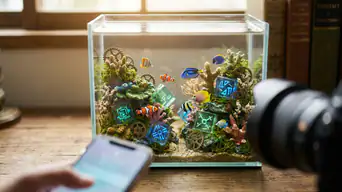
That structure works especially well when I have only a few minutes. I can play a level while waiting for an appointment or during a short break, then leave with a small sense of completion. The aquarium gives me a reason to return without requiring a long story or complicated controls. It is a gentle loop: solve, improve the tank, look at the result, and decide whether to try another challenge.
The presentation also helps the game stand out among match-three alternatives. Many games in this category use homes, gardens, restaurants, or towns as their long-term reward space. Fishdom’s underwater setting gives the progression a calmer personality. Watching the fish move around a finished tank feels less demanding than managing a large map or following a dramatic narrative. I found that atmosphere useful when I wanted a game that occupied my attention without becoming the main event of the evening.
Related News

Why WhatsApp Messenger Still Makes Everyday Communication Feel Easy

Jurassic World: The Game Is the Better Dino Tycoon for Strategic Players

Threads in Real Life: Who Should Join, Lurk, or Leave

How SHEIN Turned Shopping Into an Endless Content Feed

How to Make Fortnite Feel Smarter on Mobile

Should You Switch to Microsoft Outlook on Mobile?
The aquarium is not just decoration in my experience; it changes how I judge progress. In a purely score-based puzzle, a failed attempt can feel disposable. Here, the larger goal makes each completed stage part of a collection. I can remember which tanks I have improved and which visual areas still need work. That sense of continuity is one of the strongest reasons to choose this game over a basic match-three title.
How I approach the boards instead of playing on autopilot
The easiest mistake is to make the first available match without looking at the whole board. I get better results by scanning for combinations that can create larger clearing effects, especially near obstacles or crowded sections. A move that removes several ordinary pieces may look attractive, but setting up a stronger combination can be more valuable if the level has a restricted area that must be opened.
I also try to think one move ahead rather than chasing the most obvious color. This matters because a board can look active while offering very little progress toward its actual objective. If the level is asking me to clear a particular type of space or reach a certain part of the board, I prioritize moves that improve that position even when they produce fewer immediate matches.
Gallery

One practical habit is to pause briefly after every major clearing effect. The board often changes enough to create a new opportunity, and tapping immediately can waste it. I look at the lower portions of the board first because falling pieces may create combinations that were not visible before. This small change in rhythm makes the game feel more like a puzzle and less like a reflex exercise.
Another useful trade-off is deciding when not to spend a helpful item. I prefer saving assistance for a level where the board has become genuinely restrictive rather than using it to finish an otherwise manageable attempt. That approach reduces the feeling that every setback requires a purchase. It also makes the occasional boost feel meaningful instead of routine.
A good everyday game, with a predictable pressure point
Imagine finishing work, making tea, and wanting ten minutes of entertainment before doing anything else. Fishdom fits that moment well. I can begin a level quickly, play without learning a complicated control scheme, and stop after a single success. The aquarium gives the session a pleasant endpoint, so I do not need to commit to a long campaign or remember a complex plot.
The same design can become less comfortable when I am trying to make steady progress through a difficult stretch. A few unsuccessful attempts can turn a relaxing break into a test of patience. At that point, the game’s charm depends on whether I am happy to retry, wait, or consider an optional purchase. Players who dislike any interruption to their progress may find the loop more irritating than relaxing.
This is also why I would not describe it as a completely passive game. The bright visuals and friendly fish make it approachable, but later decisions still reward attention. I need to read the board, identify the real objective, and accept that a lucky-looking move is not always the best move. Someone seeking a very quiet visual aquarium with no puzzle pressure would be better served by a dedicated aquarium experience rather than this hybrid.
Where it compares well with familiar alternatives
Against a standard match-three game, Fishdom has a stronger reason to keep playing. The aquarium provides a visible reward space, and that makes individual levels feel less isolated. If I enjoy collecting visual improvements and seeing a themed environment develop, this is a meaningful advantage.
Compared with a large decoration or renovation game, it is more focused. I am not navigating an enormous set of unrelated tasks; the aquarium remains the central identity. That focus makes it easier to understand, though it also means the experience may feel narrower to players who want extensive building choices or a broad narrative.
It is also less suitable than a minimalist puzzle game for someone who wants pure concentration without progression systems. In a minimalist alternative, the challenge itself may be the entire reward. Fishdom adds presentation and long-term motivation, but those additions can feel like distractions if I only care about solving increasingly clever boards.
The right comparison depends on what I want from the genre. I choose this game when I want a blend of puzzle solving and visual collection. I would choose a simpler puzzle title when I want fewer interruptions, and a more elaborate management game when I want deeper customization. Fishdom occupies the middle ground effectively, but it does not replace every type of puzzle experience.
What can make the free experience frustrating
The main limitation is the familiar tension between free access and optional spending. The game costs nothing to start, which lowers the barrier for trying it, but difficult moments can make extra assistance tempting. I appreciate having that choice, yet I do not think every player will enjoy the emotional pressure that can appear after several failed attempts.
My advice is to decide on a personal rule before playing seriously. I might treat the game as a no-spend pastime, or set a small entertainment budget and stop when I reach it. Without a rule, it is easy to justify a purchase simply because a level is close to completion. The aquarium progression makes that temptation stronger because I can see the reward waiting on the other side of the obstacle.
There is also a repetition trade-off. The core match-three interaction remains the center of the experience, so anyone who tires quickly of swapping pieces will eventually feel that sameness even with the aquarium setting. The visual theme changes the mood, but it does not transform the fundamental puzzle format into something entirely different.
For that reason, I would skip Fishdom if I need a game with a fixed ending, a purely skill-based structure, or no possibility of spending pressure. I would also be cautious about recommending it to someone who tends to chase progress after frustration has replaced enjoyment. The game is at its best when I treat it as a casual hobby rather than a challenge that must be conquered immediately.
Who will get the most from the aquarium progression
Fishdom suits players who like compact sessions, recognizable rules, and a visual reward that grows over time. It is especially appealing if I enjoy arranging or collecting themed spaces but do not want the complexity of a full simulation game. The Everyone age rating also makes its friendly presentation broadly approachable, although individual preferences around optional purchases still matter.
It can work well for families sharing a device, provided everyone understands that the game includes optional purchases. The controls are accessible, and the objective of each round is easy to explain. Still, I would not hand over unrestricted purchasing access simply because the game looks gentle. The tone is suitable for a broad audience, but spending decisions deserve the same care as in any free-to-play title.
Players who enjoy planning will find more depth than the cheerful presentation initially suggests. Looking for combinations, protecting useful moves, and choosing when to use assistance can make the levels more engaging. The game is not a hardcore strategy title, but it rewards a thoughtful approach more than random tapping.
On the other hand, players who want competitive multiplayer, a rich story, or a completely open-ended aquarium simulator should look elsewhere. Fishdom’s identity is built around the repeated relationship between puzzle rounds and aquarium improvement. That clear focus is a strength for the right audience and a limitation for everyone expecting a different genre.
Practical details before installing
Playrix released Fishdom on March 2, 2016, and the current version is 9.5.5.0. It requires Android 5.0 or later. Those details make it accessible to many Android users, though I would still check the available storage and device performance before installing any game I plan to keep for a long time.
The game’s free entry point is convenient for testing the core loop without committing money upfront. I would spend a few sessions checking whether the match-three rhythm remains enjoyable before considering any optional purchase. If the aquarium progression motivates me and the boards feel satisfying, the game can provide a pleasant casual routine. If I already know that repeated puzzle attempts frustrate me, the free download will not solve that mismatch.
I would also recommend playing with notifications managed to suit your habits. A short-session game is most enjoyable when I choose when to return, rather than feeling pulled back during a busy day. That is less about a specific setting and more about keeping the game in its proper role: a small break, not an obligation.
My final recommendation
Fishdom succeeds because it gives a familiar puzzle format a distinct emotional setting. The fish and aquariums make progress feel warmer and more personal than a sequence of disconnected boards, while the match-three rounds keep the controls immediately approachable. I particularly like it for short evening sessions, waiting-room breaks, and relaxed play where I want visible progress without a steep learning curve.
Its weaknesses are just as clear. The puzzle loop can become repetitive, difficult levels may test patience, and optional purchases can be tempting when progress slows. Those issues do not ruin the experience, but they mean I would not recommend it as a perfect fit for everyone.
My verdict is that Fishdom is worth trying if you want a friendly aquarium project built around casual match-three puzzles. Play without rushing, save assistance for genuinely troublesome boards, and decide your spending limits early. With that mindset, it becomes a polished, calming game that earns its place among the more approachable puzzle choices. If you want pure puzzle minimalism or a deeper simulation, choose another option; if you want a colorful aquarium to build one short challenge at a time, this is a strong recommendation.
FAQs for Fishdom
What is Fishdom and how does it work?
Fishdom is a popular match-3 puzzle game developed by Playrix. Players solve puzzles to earn coins and resources, which they can use to decorate and create aquariums. The game combines elements of puzzle-solving with aquarium simulation, allowing users to design unique underwater environments with various fish and decorations.
Is Fishdom free to play, or are there in-app purchases?
Fishdom is free to download and play. However, it offers in-app purchases for players who wish to enhance their gaming experience. These purchases can include coins, diamonds, and special power-ups that help players progress more quickly or overcome challenging levels.
Can Fishdom be played offline, or is an internet connection required?
Fishdom can be played offline, allowing users to enjoy the game without an internet connection. However, some features, such as updates, in-app purchases, and certain social interactions, require an internet connection to function properly.
What are the system requirements for installing Fishdom on Android and iOS devices?
For Android devices, Fishdom requires Android 4.2 or later. On iOS devices, the game requires iOS 9.0 or later. It is compatible with iPhone, iPad, and iPod touch. Players should ensure their devices meet these requirements for smooth gameplay.
Are there any tips for progressing quickly in Fishdom?
To progress quickly in Fishdom, focus on completing levels efficiently to earn more coins. Utilize power-ups strategically to overcome difficult puzzles. Regularly check for events and challenges for extra rewards. Additionally, expanding your aquarium with new fish and decorations can provide bonuses and enhance the gaming experience.
Pros
- Engaging match-3 puzzles with unique aquatic themes.
- Beautifully designed aquariums to customize.
- Regular events and updates keep gameplay fresh.
- Offline mode available for uninterrupted play.
- In-app purchases are optional
- not mandatory.
Cons
- Some levels require significant time to complete.
- Limited lives can slow down gameplay progress.
- In-app purchases can be pricey.
- Ads can be intrusive at times.
- Game can become repetitive over time.


